

(Proposed by Psychologist Stephen B. Karpman in 1968)
Hello everyone!
Yesterday, I had the privilege and honor of teaching someone about the Karpman Drama Triangle and it was such a joy to do because when I first found out about it through my therapist- it basically blew my mind! So I’d like to share it with you as well.
There are Three Components to The Drama Triangle:
- Rescuer
- Victim
- Persecutor
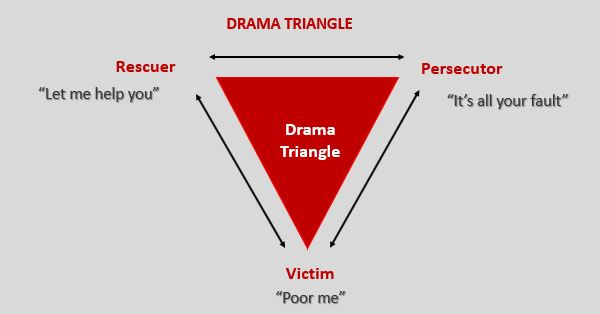
And when you interact with others, you play a role in that interaction.
Rescuers:
Rescuers interact with Victims and most of the time attempt to “save” the Victim from experiencing or perceiving harm.
While Rescuers may have good intentions, they may fail to realize that they are keeping the Victim dependent and may ignore their own needs because they are focused on the Victim.
Most often than not, Rescuers will neglect their own needs and wind up feeling tired, pressured, and drained.
Victims:
A Victim will feel hopeless, trapped, and/or useless. They think that they have no way of getting better and they don’t consider their own personal responsibility for taking charge to make changes in their life.
Victims will feel powerless and will often blame Persecutors. Victims and Rescuers form a relationship against Persecutors. The Victim thinks they need the Rescuer and the Rescuer thinks they need the Victim.
If Victim stay in the mindset of a Victim, they will be unable to solve problems, change their lives, and/or feel satisfied in general.
Persecutors:
Persecutors will blame the Victims and judge their behaviors, without assisting, helping, or guiding the Victim.
Persecutors will tend to be bullies and oppress the Victim.
I understand that this is a lot to let sink in if you have not heard of this at all.
Which is why I have added extra resources for you below.
But now that you know about The Drama Triangle, how can this apply in your life?
Does it make sense? Do you feel like it’s applicable?
What role do you consider yourself reverting to the most?
Just something to think about…
Sources:
https://leadershiptribe.com/the-drama-triangle-explained/
Extra resources:
 Foolishly Happy
Leave a comment